
Cold Chain Transportation Services in Delhi
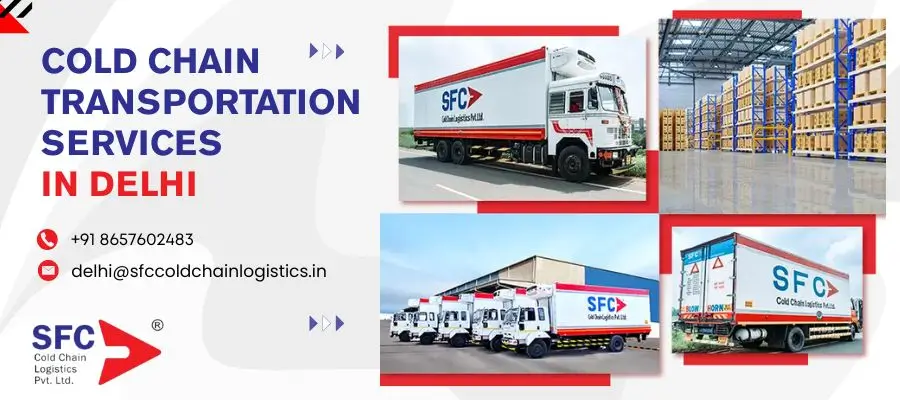
Over the last few years, many businesses in Delhi have gradually shifted toward using Cold Chain Transportation Services in Delhi because they simply can’t take risks with temperature-sensitive items anymore. The pharma market has grown quickly, retail chains have spread across different parts of the city, and customers today ask a lot more questions about the quality and freshness of what they buy.
Because of this change, companies that deal with medicines, fresh fruits, vegetables, vaccines, or similar products have realised that transport needs more attention than they earlier thought. Even a small temperature slip can slow their work or spoil the goods, which ultimately hits their finances. That’s why knowing how the cold chain works has quietly become a routine part of running a stable supply operation rather than something optional.
Understanding Cold Chain Transportation
Anyone who has worked with temperature-sensitive items knows how easily a shipment can get spoiled. Even a minor temperature jump can ruin medicines or food. Most of the actual work happens while checking the vehicle, adjusting the cooling, and making sure the temperature doesn’t drift during the trip. A lot of pressure falls on the people doing the job, because one small mistake can cause big losses.
In Delhi, the cold chain process runs more like a practical network than a perfect system. Products often stay in small refrigerated rooms for a short time before being loaded. Drivers and helpers keep calling the team to update temperature readings because highways, traffic, and sudden weather changes can affect the cooling. If anything goes wrong at any point — loading, transit, or storage — the entire batch has to be rechecked, and sometimes companies suffer major losses.
One reason Delhi is preferred for this work is its location. The city connects quickly to nearby states, and the airport handles a lot of pharma and perishable cargo.
Types of Cold Chain Transportation Services Available
Pharmaceutical Cold Chain Transportation
Working with pharma cold chain transport in Delhi isn’t as smooth or technical as it sounds on paper. People who handle medicines daily know how unpredictable the job can get. A tiny temperature change — even for a few minutes — can make an entire batch unusable. Most of the effort goes into routine checks, fixing cooling issues on the go, and making sure the vehicle stays stable during traffic or long halts. You can’t rely completely on machines; a lot depends on the people handling the shipment.
For pharma companies, the rules are strict and sometimes tiring. Vehicles need to be tested properly before they are allowed to carry drugs. Teams use data loggers, backup cooling systems, and whatever tools they have to avoid a breakdown during transit. Some companies even ask for temperature mapping just to see whether the cooling is uniform from one corner of the vehicle to the other. It looks simple from outside, but it takes a lot of manual effort.
The food industry depends heavily on the same system. Items like vegetables, milk, meat, seafood, and frozen goods all spoil very quickly if temperatures are not right. Transporters mostly work with three common temperature levels — chilled, frozen, and a slightly warm but controlled range. Multi-temperature vehicles have become useful because they let drivers carry different products together without mixing temperature requirements. It saves fuel, time, and money.
During COVID, vaccine transport became a completely different challenge. Regular vaccines stay fine at 2°C to 8°C, but the new mRNA vaccines needed extremely low temperatures. Many transporters had to upgrade overnight and bring in deep-freeze units, ultra-cold storage, and stronger monitoring tools. Now, GPS and live temperature tracking have become routine because companies don’t want even a small mistake when vaccines are involved.
Conclusion
Cold chain transport in Mumbai has grown mostly because a lot of temperature-sensitive goods pass through the city every single day. People who work in this field know that the real challenge is not the vehicles or the machines — it’s keeping the product safe throughout the journey.
Many businesses here prefer working with transporters who have been doing cold chain work for a long time. Experienced teams know how to deal with delays, traffic, temperature drops, and all the small issues that come up on the road. Delhi’s setup is also improving, with better warehouses and more reliable vehicles than before.
For most companies, choosing a good cold chain partner is not just another expense. It’s more like picking someone you can trust with the quality of your products. Because customers today expect safe and fresh goods, businesses can’t afford careless handling
A strong cold chain team doesn’t only deliver goods — it cuts down risks, keeps the process stable, and lets you focus on growing your business instead of dealing with avoidable problems.
Frequently Asked Questions
1. What temperature ranges are maintained in cold chain transportation services?
Cold chain transportation maintains various temperature ranges depending on the product type. Pharmaceutical products and vaccines typically require 2°C to 8°C, while some specialty biologics need ultra-low temperatures of -20°C to -80°C. Chilled food products are transported at 0°C to 5°C, frozen foods at -18°C to -25°C, and certain items require controlled ambient conditions of 15°C to 25°C. Professional Cold Chain Transportation Services hyderabad providers offer multi-temperature vehicles that can maintain different zones simultaneously, ensuring optimal conditions for diverse product categories in a single shipment.
2. How is temperature monitored during cold chain transportation?
Modern cold chain services use sophisticated IoT-enabled monitoring systems with wireless sensors that track temperature, humidity, and location in real-time. These sensors transmit data to cloud-based platforms every few minutes, creating a complete temperature history. Data loggers installed in vehicles provide backup documentation for regulatory compliance. Automated alerts notify logistics managers immediately if temperatures deviate from set parameters, enabling quick corrective action. Many Pharma Cold Chain Transportation Services Delhi providers also offer clients access to tracking portals where they can monitor their shipments in real-time, ensuring complete transparency throughout the journey.
3. What happens if temperature deviations occur during transport?
When temperature deviations occur, immediate protocols are activated. The monitoring system sends automatic alerts to the driver and logistics control center. Drivers are trained to stop the vehicle and assess the refrigeration system, implementing emergency protocols such as activating backup cooling systems or transferring cargo to a standby vehicle if necessary. Each temperature excursion is documented with details about duration, extent, and corrective actions taken. For pharmaceutical products, temperature excursion reports are provided to clients who can then consult with their quality teams to determine product usability. Reputable Cold Chain Logistics Services Delhi providers maintain backup vehicles and contingency plans to minimize the impact of such incidents.
4. Are cold chain services available for small businesses and startups?
Yes, professional cold chain services are accessible to businesses of all sizes. Many Refrigerated Transport Services Delhi providers offer flexible solutions including consolidated shipments where multiple small customers share vehicle space, reducing costs while maintaining service quality. Minimum shipment requirements vary by provider, but options exist for even single-pallet shipments. Some companies offer pay-per-use models rather than requiring long-term contracts, making cold chain logistics feasible for startups and small enterprises. The key is finding a provider who understands small business needs and offers scalable solutions that grow with your business while maintaining the same quality standards applied to large corporate clients.
5. What documentation is required for cold chain transportation in Delhi?
Documentation requirements vary based on product type and destination. For pharmaceutical products, you’ll need manufacturing licenses, drug licenses, test certificates, and temperature validation reports. Food products require FSSAI licenses, health certificates, and product specifications. All shipments need proper invoicing, packing lists, and transport documents. Cold Chain Supply Chain Solutions Services Delhi providers typically assist with documentation preparation and ensure compliance with regulatory requirements. For interstate transport, additional documents like e-way bills are necessary. International shipments require export licenses, certificates of origin, and compliance with destination country regulations. Professional cold chain partners maintain expertise in documentation requirements and can guide you through the process, ensuring all paperwork is complete and accurate to avoid delays or regulatory issues.
Got a question or need a service? We’re here to help! Reach out to us today—let’s connect and make your experience extraordinary.
- Cold Chain Transportation Services
- Temperature Controlled Transportation Services
- Cold Chain Logistics Services
- Pharma Cold Chain Transportation Services
- Refrigerated Transport Services
- Cold Chain Supply Chain Solutions Services
